Marketing Assistant and AI Automation

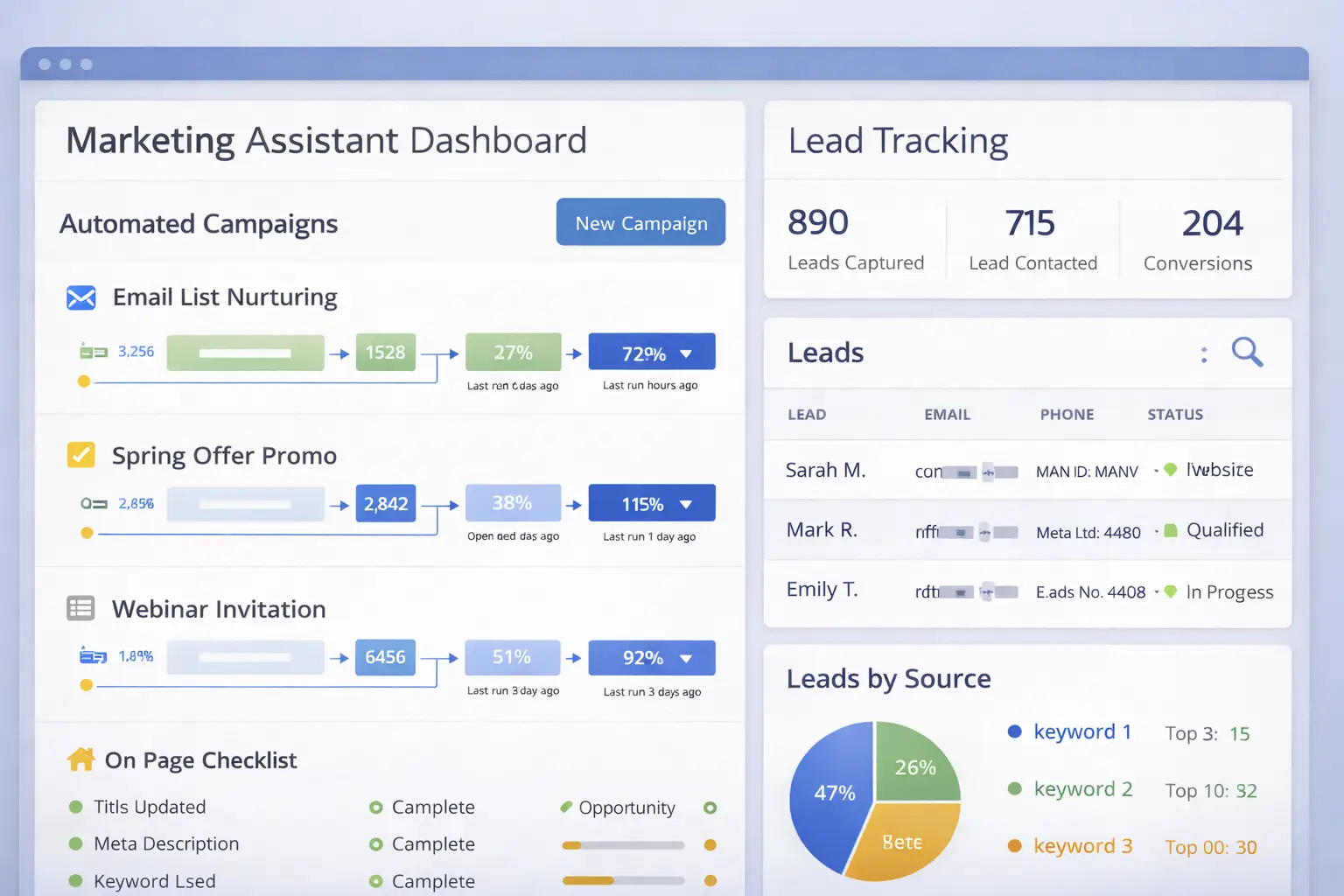
Marketing Assistant: How AI Tools Are Transforming Marketing Workflows
Marketing today involves dozens of moving parts.
Businesses need to manage content, track leads, monitor analytics, follow up with prospects, and keep campaigns running smoothly across multiple channels. Handling all of this manually can quickly become overwhelming.
That’s where a marketing assistant comes in.
Traditionally, marketing assistants helped teams organize campaigns, manage data, and handle repetitive tasks. Today, many businesses are turning to AI-powered marketing assistants that automate these responsibilities and streamline marketing workflows.
Platforms like Aitoleads act as intelligent marketing assistants by helping businesses capture leads, automate follow-ups, and track engagement without requiring constant manual effort.
Let’s explore how marketing assistants work and how automation is reshaping this role.
What Is a Marketing Assistant?
A marketing assistant is a role or system that supports marketing teams by managing operational tasks related to campaigns, lead management, and communication.
Typical responsibilities of a marketing assistant may include:
- Organizing marketing campaigns
- Tracking customer interactions
- Managing contact databases
- Assisting with content publishing
- Monitoring campaign performance
These tasks help marketing teams stay organized while focusing on strategy and growth.
The Rise of AI Marketing Assistants
With modern technology, many of the tasks previously handled by human marketing assistants can now be automated.
AI-powered marketing assistants help businesses:
- Capture leads automatically
- Send personalized follow-up messages
- Track engagement and activity
- Organize customer data
- Analyze campaign performance
Automation allows businesses to manage marketing operations more efficiently while reducing manual workloads.
Platforms like Aitoleads function as a digital marketing assistant by handling repetitive marketing tasks and ensuring leads are properly tracked and nurtured.
Key Tasks a Marketing Assistant Handles
Whether human or AI-powered, marketing assistants typically focus on several important operational tasks.
Lead Capture and Organization
Marketing assistants often help collect and organize leads generated through websites, forms, or campaigns.
Automation platforms can instantly capture visitor information and store it in a centralized database.
Campaign Coordination
Marketing campaigns often involve multiple steps and channels.
Marketing assistants help coordinate tasks such as:
- Scheduling content
- Tracking campaign timelines
- Monitoring performance metrics
Automation tools simplify this process by running workflows automatically.
Customer Communication
Consistent communication is critical for maintaining relationships with potential customers.
Marketing assistants help manage:
- Email follow-ups
- Customer inquiries
- Campaign responses
Automation platforms allow businesses to respond quickly to leads and maintain consistent engagement.
Marketing Data and Analytics
Tracking performance metrics helps businesses understand what works and what doesn’t.
Marketing assistants often monitor:
- Website traffic
- Campaign results
- Lead engagement
These insights allow marketing teams to improve future campaigns.
Why Businesses Use AI Marketing Assistants
AI-powered marketing assistants are becoming increasingly popular because they help businesses scale marketing efforts without increasing manual workload.
Benefits include:
- Automating repetitive marketing tasks
- Capturing leads instantly
- Improving response times
- Organizing customer data
- Increasing marketing efficiency
By automating operational tasks, businesses can focus more on strategy and creative work.
Marketing Assistants and Lead Generation
One of the most important roles of a marketing assistant is helping convert marketing activity into actual business opportunities.
This includes guiding prospects through the early stages of the customer journey.
Platforms like Aitoleads help businesses transform marketing assistants into automated lead management systems by:
- Capturing leads from website traffic
- Organizing prospects in a centralized system
- Automating follow-up messages
- Tracking engagement and interactions
This ensures that potential customers are consistently nurtured throughout the marketing process.
Human Marketing Assistants vs AI Assistants
Both human and AI assistants can support marketing teams, but they serve slightly different roles.
Many businesses use both approaches together for maximum efficiency.
FAQ: Marketing Assistant
What does a marketing assistant do?
A marketing assistant helps manage campaigns, track leads, coordinate marketing tasks, and support marketing teams.
Can AI replace a marketing assistant?
AI tools can automate many tasks but still work best when combined with human strategy and oversight.
Do small businesses need marketing assistants?
Yes. Even small teams benefit from systems that help manage marketing workflows and customer engagement.
Final Thoughts
Marketing assistants play an important role in keeping marketing operations organized and efficient.
As marketing systems become more complex, automation tools are helping businesses streamline these responsibilities.
AI-powered platforms like Aitoleads act as digital marketing assistants, helping businesses capture leads, automate communication, and manage marketing workflows more effectively.
By combining automation with strategic marketing efforts, businesses can improve efficiency while focusing on growth.


Book A Demo with Ashley