Search Engine Ranking Reports Explained

Search Engine Ranking Reports: Tracking SEO Performance That Drives Leads
Improving search visibility is a major goal for many businesses.
But once a website starts ranking in search engines, the next question becomes just as important:
How do you measure progress?
That’s where search engine ranking reports come in.
Search engine ranking reports help businesses track how their website performs in search results over time. These reports show where webpages appear for specific keywords and how those rankings change as SEO strategies evolve.
However, rankings alone don’t tell the full story. Modern platforms like Aitoleads help businesses connect ranking data with actual lead generation results.
Let’s explore how search engine ranking reports work and why they are important.
What Are Search Engine Ranking Reports?
Search engine ranking reports are analytics reports that track how webpages rank in search engine results pages (SERPs) for targeted keywords.
These reports typically monitor:
- Keyword ranking positions
- Ranking changes over time
- Competitor rankings
- Search visibility trends
- Organic traffic performance
By reviewing these reports regularly, businesses can see how well their SEO strategies are performing.
Why Search Engine Ranking Reports Matter
SEO improvements often take time to appear in search results.
Ranking reports provide insight into whether optimization efforts are working and where adjustments may be needed.
Businesses use ranking reports to:
- Monitor keyword performance
- Identify opportunities for improvement
- Track progress toward SEO goals
- Understand search visibility trends
- Evaluate competitor positioning
Consistent reporting helps businesses make informed marketing decisions.
What Information Ranking Reports Typically Include
Most search engine ranking reports provide a combination of performance metrics.
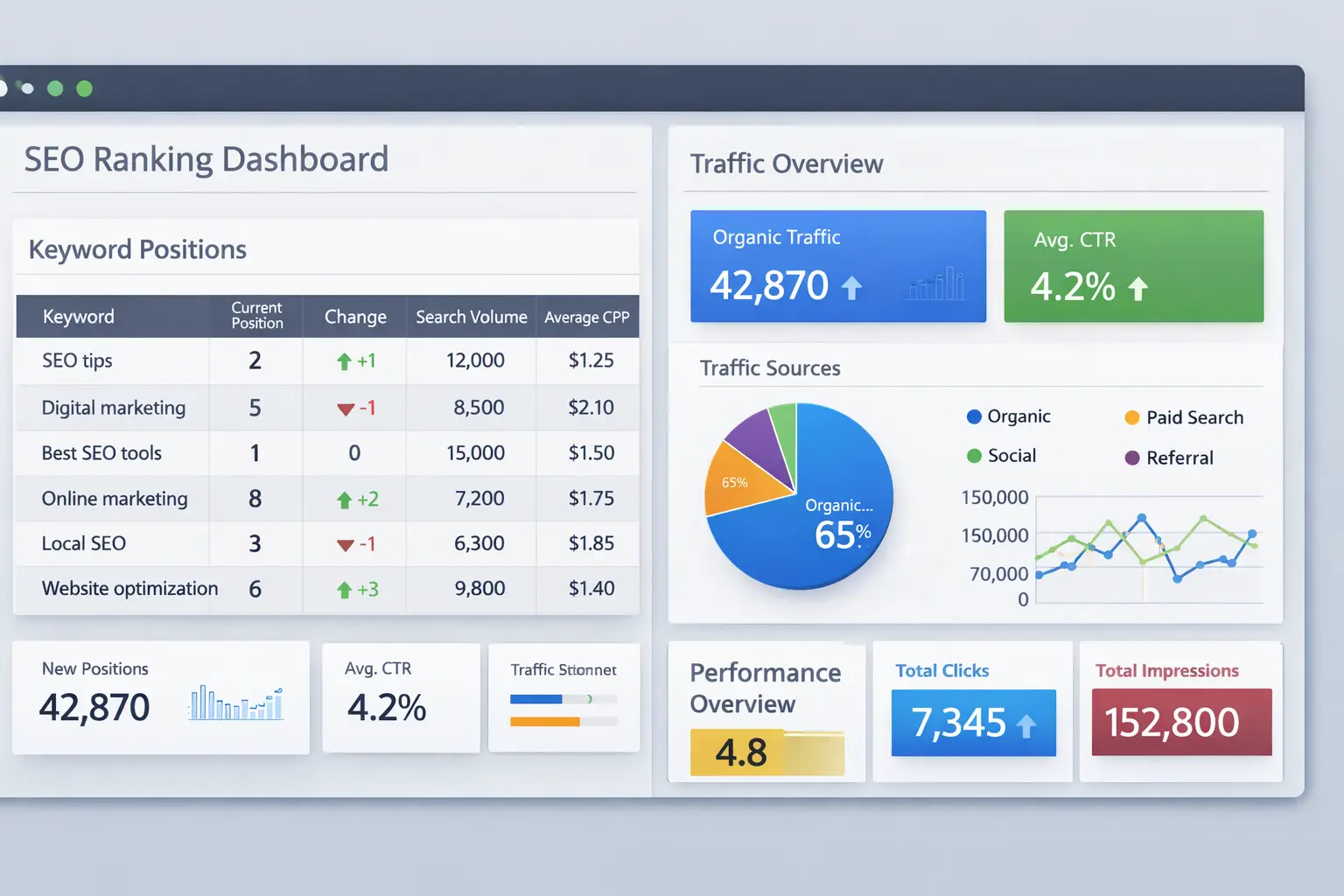
Keyword Position Tracking
One of the most important elements of ranking reports is keyword position data.
This shows where a website appears in search results for targeted search terms.
For example, a report may show that a page ranks:
- Position 5 for one keyword
- Position 12 for another
- Position 30 for a competitive term
Tracking these positions helps measure SEO progress.
Ranking Trends Over Time
Ranking reports often include charts showing how rankings change over weeks or months.
This helps businesses identify patterns such as:
- Gradual ranking improvements
- Sudden drops or increases
- Seasonal search trends
Long-term trends provide valuable insight into the effectiveness of SEO strategies.
Competitor Comparisons
Some reports also track how competitors rank for the same keywords.
This allows businesses to evaluate their visibility relative to others in the market.
Competitor data can reveal opportunities to improve rankings or identify gaps in content strategies.
Search Visibility Metrics
Search visibility measures how often a website appears across a set of keywords.
Higher visibility typically means stronger search presence and greater potential for traffic.
This metric helps businesses understand their overall SEO performance rather than focusing on a single keyword.
Why Rankings Alone Aren’t Enough
While rankings are important, they don’t always reflect business outcomes.
For example, a website might rank highly for a keyword but still fail to generate leads or conversions.
This is why many businesses combine ranking reports with tools that track user engagement and lead generation.
Platforms like Aitoleads help bridge the gap between search visibility and business results.
Connecting Ranking Data to Lead Generation
Aitoleads allows businesses to go beyond ranking reports by connecting search traffic to lead capture systems.
With automation tools in place, businesses can:
- Capture leads from organic search traffic
- Automatically follow up with prospects
- Track user engagement and conversions
- Organize and manage potential customers
This approach turns SEO insights into actionable growth opportunities.
Instead of only tracking rankings, businesses can track how search visibility translates into real leads.
How Businesses Use Ranking Reports Effectively
Search engine ranking reports are most valuable when they are reviewed consistently.
Businesses often use these reports to:
- Identify pages that need optimization
- Discover new keyword opportunities
- Track SEO campaign progress
- Evaluate the impact of new content
When combined with lead tracking systems, ranking reports become part of a broader growth strategy.
FAQ: Search Engine Ranking Reports
How often should ranking reports be reviewed?
Many businesses review ranking reports monthly to track SEO progress and identify trends.
Do ranking reports show website traffic?
Ranking reports focus on keyword positions, but they are often paired with analytics tools that track traffic and engagement.
Can ranking reports predict business growth?
Rankings can indicate search visibility, but combining ranking data with lead tracking provides a clearer picture of growth potential.
Final Thoughts
Search engine ranking reports provide valuable insight into how a website performs in search engine results.
By tracking keyword positions, visibility trends, and competitor performance, businesses can better understand the impact of their SEO strategies.
When ranking insights are combined with automation tools like Aitoleads, businesses can move beyond simple reporting and turn search visibility into measurable lead generation and growth.


Book A Demo with Ashley